


Neighborhood
Nice - Promenade des Anglais
The Promenade des Anglais: much more than an address, a true Nice landmark. Lined with palm trees, overlooking the Mediterranean and adorned with remarkable buildings, the Promenade des Anglais embodies the elegance and art of living that make Nice so unique. From its origins in the early 19th century, shaped by the British winter visitors, to its international renown today, the Promenade has witnessed more than two centuries of history. Belle Époque palaces, Art Deco architecture, prestigious residences and breathtaking views over the Baie des Anges… Every building tells a story and contributes to the identity of this iconic seafront. At Winter Immobilier, we are passionate about sharing the architectural and property heritage that makes Nice so distinctive. Discover the history of the Promenade des Anglais, its secrets and its most iconic buildings. Winter Immobilier – Nice since 1958.
The Promenade des Anglais in Nice: Two Centuries of History, Elegance and Heritage
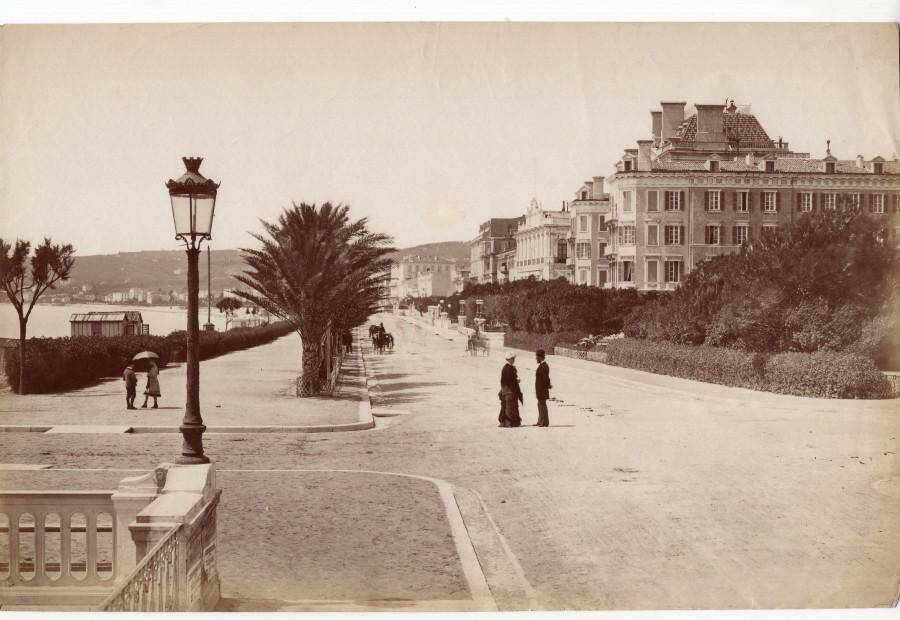
There are few places in the world whose name so instantly evokes a city, a landscape and a way of life. In Nice, the Promenade des Anglais is far more than a seafront avenue: it is an urban landmark, an internationally recognised symbol and a remarkable witness to the history of the French Riviera.
Stretching for almost seven kilometres, it follows the curve of the Baie des Anges, between Quai des États-Unis and the airport area. Its palm trees, pebble beaches, historic hotels, grand palaces and elegant residences create a landscape that is instantly recognisable.
Yet behind this iconic image lies a fascinating story. Originally, there were no grand hotels or wide boulevards, but simply a modest dirt path created in the early nineteenth century at the initiative of the British community living in Nice.
How did this small footpath become one of the world's most famous seafront promenades? Let us explore two centuries of history, architecture and urban transformation.
1. Before the Promenade: A Still Untamed Seafront
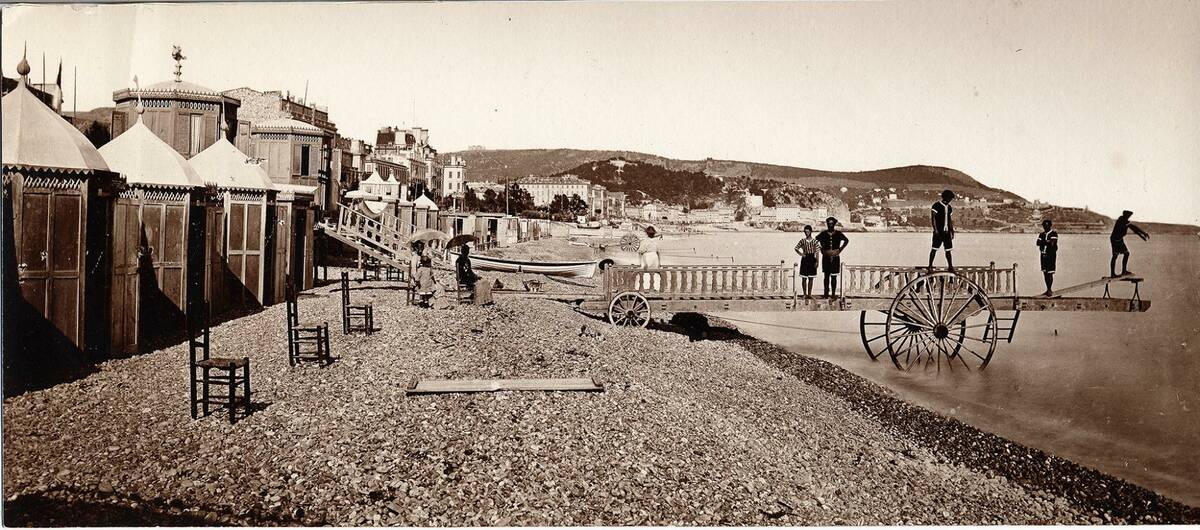
The Promenade des Anglais – Historic seaside bathing facilities along the Nice coastline, photograph from 1873. Source: Alpes-Maritimes Departmental Knowledge Portal.
In the eighteenth century, Nice still belonged to the Kingdom of Piedmont-Sardinia. The historic city was mainly organised around its old town, while the land west of the Paillon River remained largely rural.
The coastline, so sought-after today, had not yet undergone the developments we know. The beaches were covered with pebbles, the land close to the sea was sparsely built upon, and opportunities for walking along the shore were limited.
From the middle of the eighteenth century onwards, Nice gradually attracted foreign visitors, particularly from Britain. These travellers came in search of a milder climate than that of northern Europe, especially during the winter months.
The Scottish writer Tobias Smollett helped introduce the city to British audiences following his stay in 1763.
This growing foreign presence was to have a profound influence on the urban development of Nice. Winter visitors wanted pleasant surroundings, walking areas and places to socialise by the sea. It was in this context that the idea of a coastal pathway first emerged.
2. 1822–1824: The Birth of the Chemin des Anglais
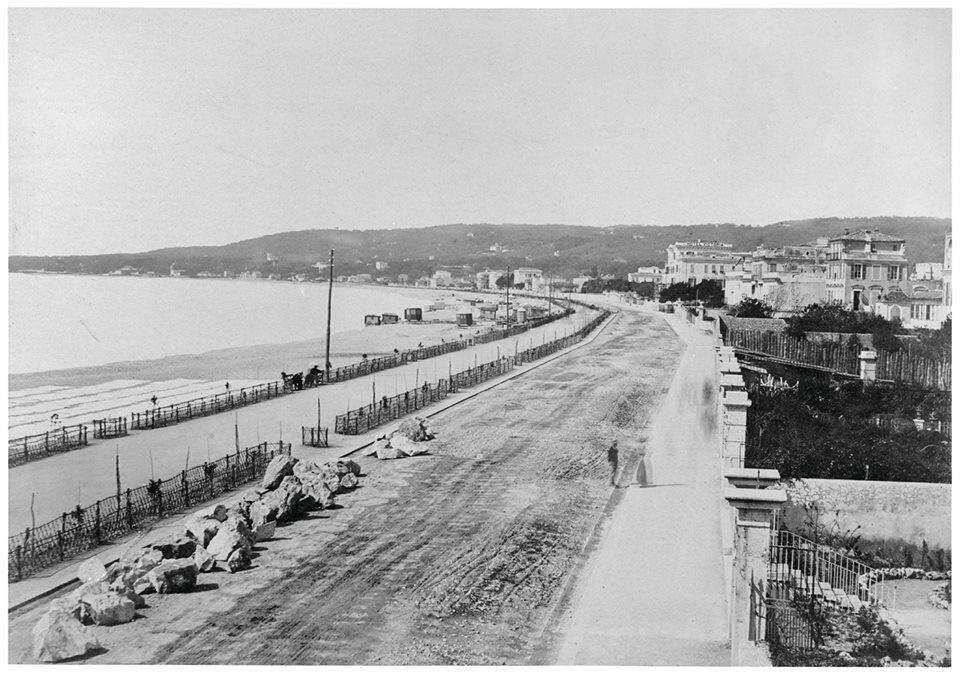
An old view of the Promenade des Anglais, mid-nineteenth century. Historical photograph, to be compared with the collections of the Théâtre de la Photographie et de l'Image.
The history of the Promenade des Anglais is closely linked to two British figures: the Reverend Lewis Way and Lady Olivia Barnard Sparrow.
In 1822, Lewis Way, a pastor within Nice's Anglican community, launched a fundraising appeal among his congregation to finance the creation of a path along the seafront.
The initiative also had an important social dimension. Following a particularly difficult winter and poor harvests, part of the local population was facing economic hardship. The construction work provided employment for local residents.
The first pathway was modest: approximately two metres wide, connecting the right bank of the Paillon River to the area of what is now Rue Meyerbeer, in the Croix-de-Marbre district.
Official documents initially referred to it as the Strada del Littorale. Local residents soon gave it a more familiar name: Camin dei Inglés, meaning the Englishmen's path in the local dialect.
The Promenade was therefore born out of a private initiative, funded by British winter visitors and built with the participation of the local population.
3. 1844–1860: The Promenade Takes Shape and Expands
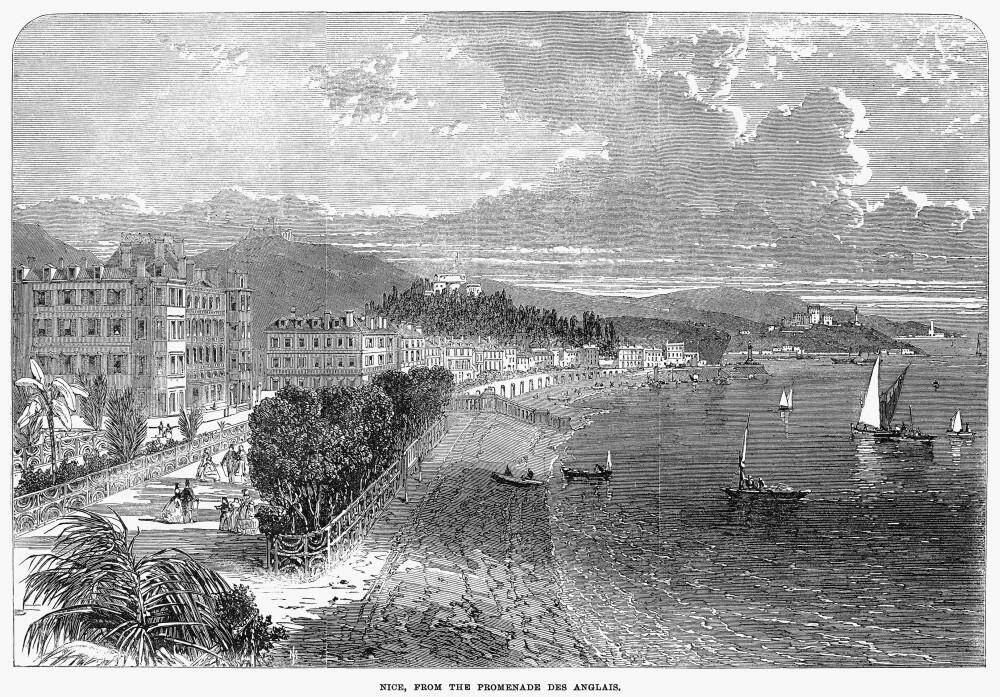
Nice, France, 1866 – The Promenade des Anglais and the Baie des Anges, looking east. English wood engraving, 1866. Historical illustration.
The success of the pathway encouraged the municipality to continue its development.
In 1832, the Consiglio d'Ornato was established. This institution played a major role in the planning and embellishment of Nice, overseeing urban development and architectural projects.
In 1844, the municipality extended the pathway westwards towards the Baumettes district. It was also around this time that it officially received the name « Promenade des Anglais ».
The planting of trees and shrubs gradually enhanced its appearance. By 1856, the promenade had reached the Magnan valley and its width had been increased to approximately eight metres.
The city was beginning to transform its seafront into a genuine holiday destination. The plots of land along the new avenue attracted wealthy owners, who built villas and residences there.
The Promenade gradually became one of the most desirable addresses in Nice.
4. The Belle Époque: The Golden Age of Winter Visitors and Grand Hotels
T
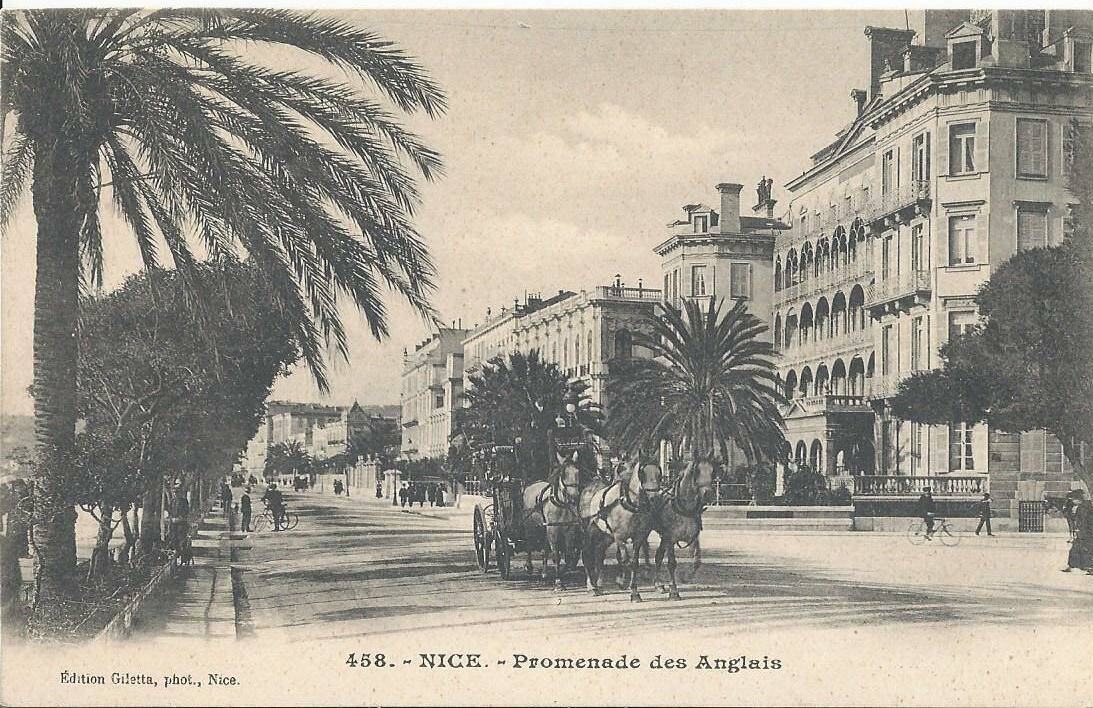
he Promenade des Anglais around 1900, with horse-drawn carriages and elegant façades – an old postcard attributed to Gilletta.
The second half of the nineteenth century marked a major turning point.
Following Nice's annexation to France in 1860, the city experienced a new period of growth. The development of the railway made travel from Paris and other major European capitals easier. Increasing numbers of winter visitors arrived: British, Russian, Belgian and German travellers, as well as aristocrats from across Europe.
The Promenade became the heart of Nice's social life.
It was a place to stroll, meet and be seen. Horse-drawn carriages, elegant clothing, chairs facing the sea and social gatherings along the pavements all became part of the winter season's rituals.
The villas belonging to the first visitors were gradually joined, and in some cases replaced, by grand hotels and prestigious residential palaces.
Among the iconic establishments that shaped this period were:
- The Hôtel West-End, formerly the Hôtel Victoria, at number 31.
- The Hôtel Royal, inaugurated in 1905.
- The Negresco, which opened in 1913.
- The Hôtel Ruhl, also inaugurated in 1913, later making way for subsequent developments.
These buildings reflect the architectural diversity of the Promenade: Neoclassical influences, eclectic styles, Belle Époque elegance and monumental architecture.
The Promenade became a true showcase for the Riviera, whose reputation extended far beyond France.
5. The Jetée-Promenade: A Palace Built Above the Sea
Th
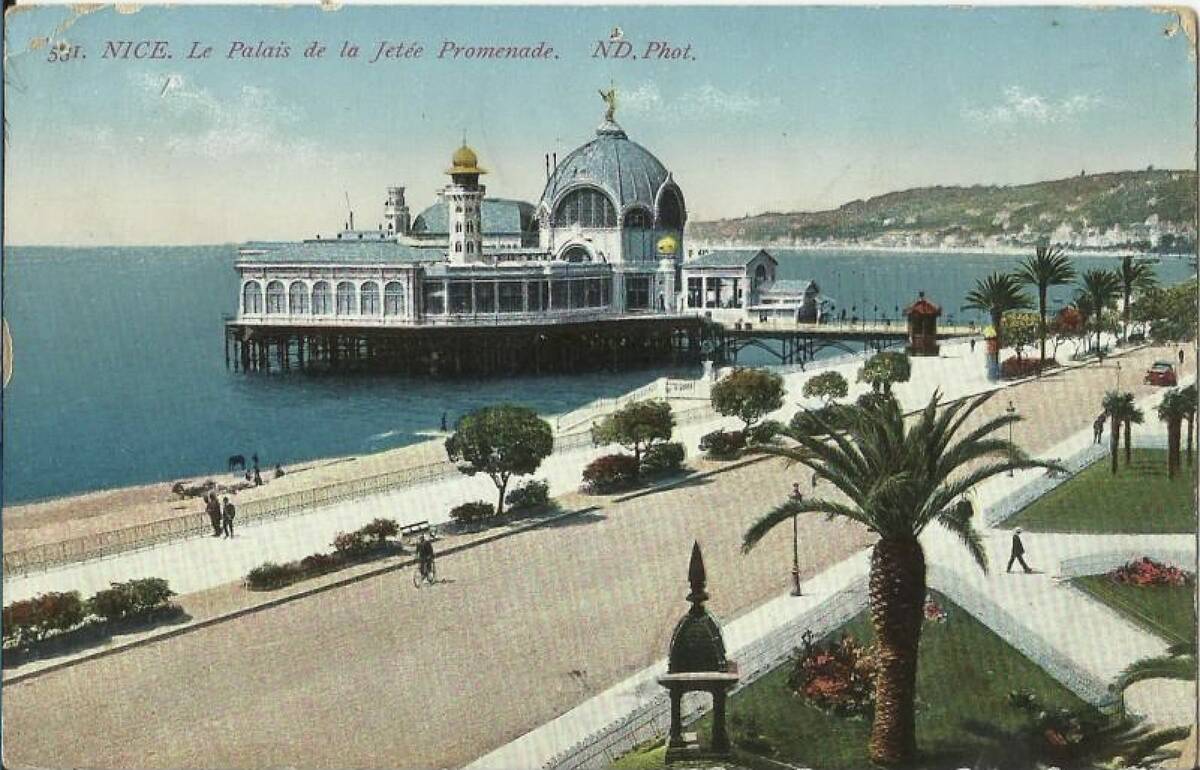
e Palais de la Jetée-Promenade, colour postcard dating from around 1910. Source: Antiqu-Arts collection. Reproduction rights to be checked.
It is impossible to tell the story of the Promenade without mentioning one of its most spectacular landmarks: the Palais de la Jetée-Promenade.
Built on stilts above the Mediterranean, this entertainment complex became one of the symbols of Nice in the late nineteenth century.
The first structure was completed in 1880, before being destroyed by fire in 1883. A new palace was subsequently built and inaugurated in 1891.
With its spectacular architecture, domes and entertainment facilities, it welcomed an international clientele seeking evenings out, performances and fashionable leisure activities.
The building was an extraordinary landmark for photographers and postcard publishers. It played a major role in spreading the image of Nice throughout Europe.
Its disappearance during the Second World War profoundly changed the appearance of the bay. Dismantled during the conflict, the palace left no trace behind, despite having once been one of the most famous images of the Promenade.
6. The 1920s and 1930s: Modernity and Art Deco Architecture
Nice
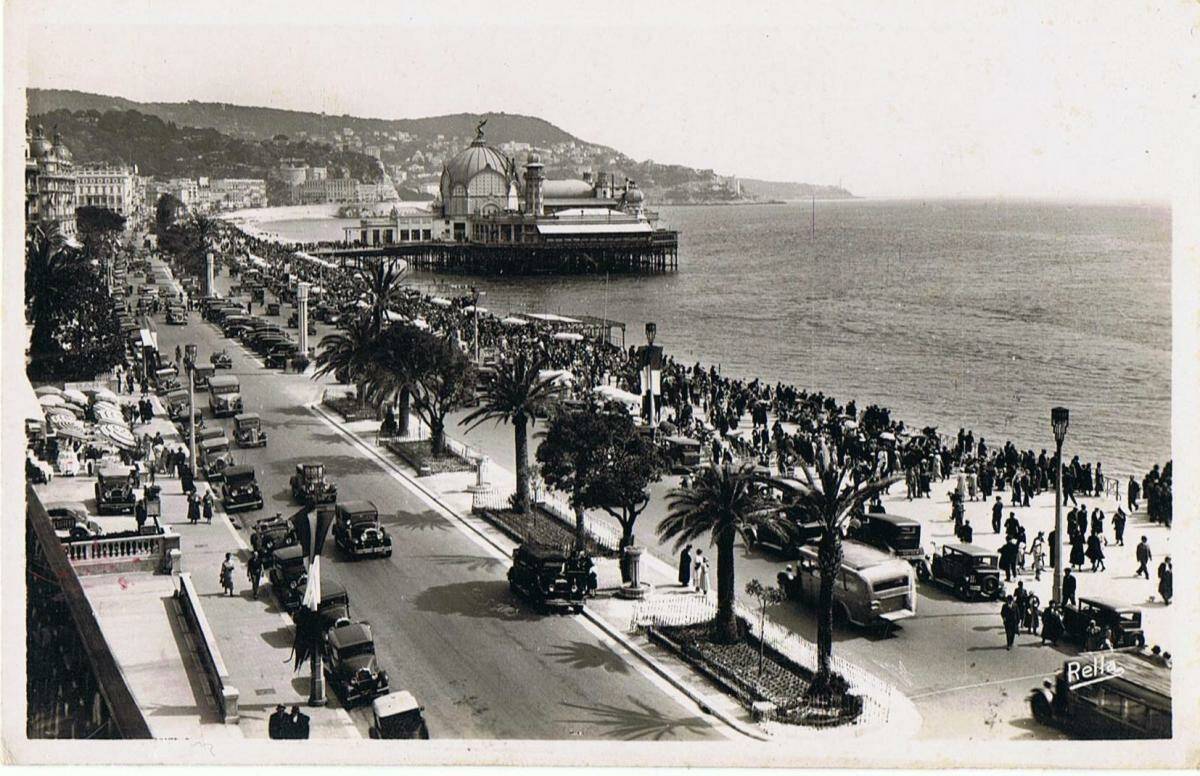
Promenade and the Jetée Casino in the 1930s – historical photograph from a secondary collection.
After the First World War, Nice continued to evolve.
Tourism patterns changed. The city attracted a more diverse clientele, including American visitors, while the summer season gradually became increasingly important.
The automobile also transformed the way the Promenade was used.
During the mayoralty of Jean Médecin, widening works undertaken around 1930 responded to the growing volume of traffic. The Promenade increasingly became a major urban boulevard, adapted to modern transport.
This modernisation coincided with a new architectural period.
Art Deco became an important feature of several iconic buildings along the seafront. The Palais de la Méditerranée, inaugurated in 1929 at number 15, is one of the finest examples.
Designed by architects Charles and Marcel Dalmas, it is distinguished by its monumental façade, geometric lines and sculpted decoration.
Other residential buildings also appeared, gradually joining the older hotels and palaces.
The Promenade thus became a remarkable showcase of Nice's architectural history, bringing together several generations of buildings.
7. After the War: The Transformation of the Seafront and the Rise of Residential Buildings
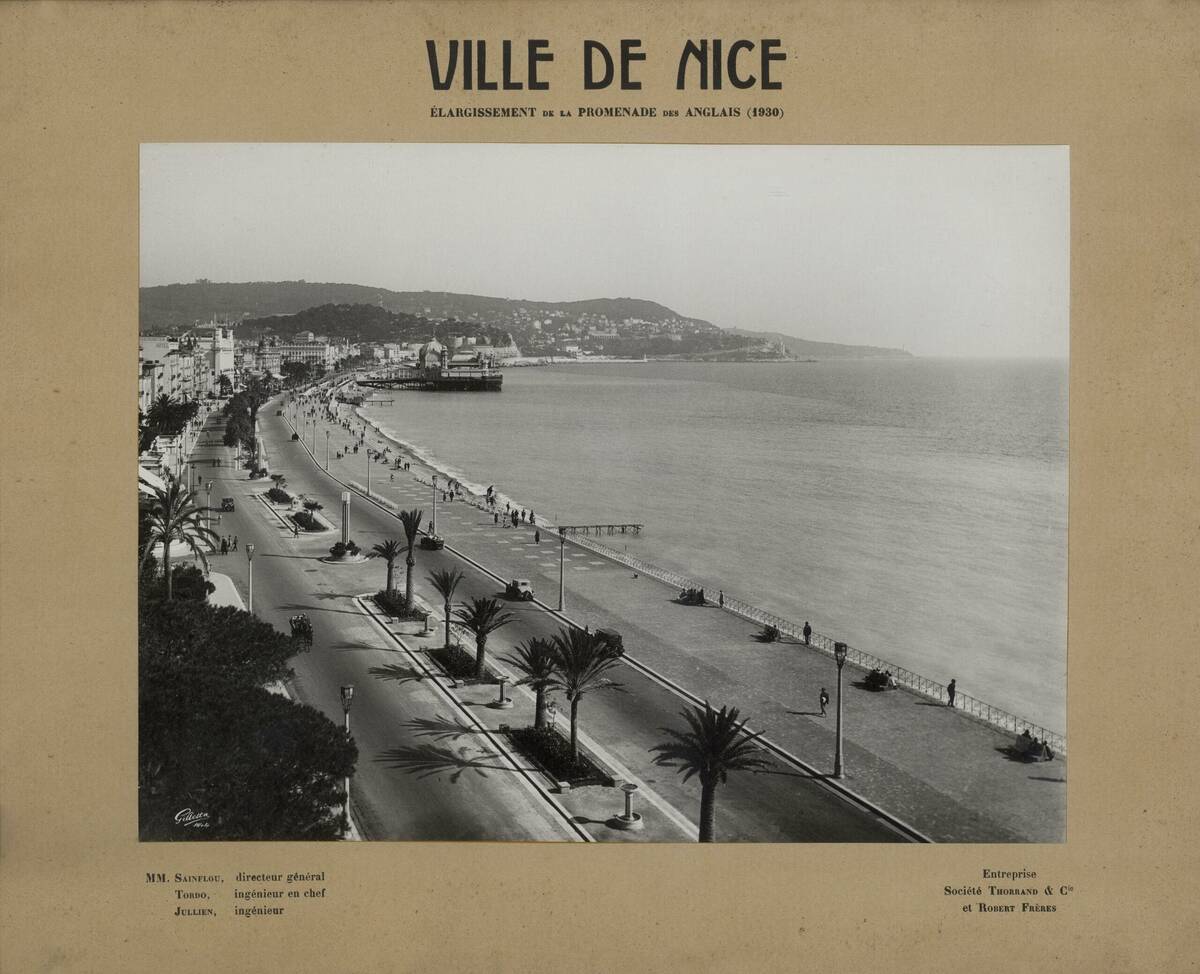
The widening of the Promenade des Anglais in 1930 – archival photograph, Archives Nice Côte d'Azur.
Following the Second World War, the Promenade continued to evolve.
Everyday uses changed: cars occupied an increasingly important place, beaches welcomed more summer visitors and residential development expanded.
Large private estates and historic hotels now stood alongside apartment buildings designed to meet the growing demand for accommodation along the coastline.
Architects explored new forms: light-coloured façades, rounded balconies, loggias, large windows and stepped building profiles.
This period helped shape much of the Promenade's appearance today.
For architecture enthusiasts, it offers a particularly interesting insight into Nice's evolution: from the aristocratic holiday villas of the nineteenth century to the modern residential buildings of the post-war era.
8. The Promenade des Anglais Today: A UNESCO World Heritage Setting
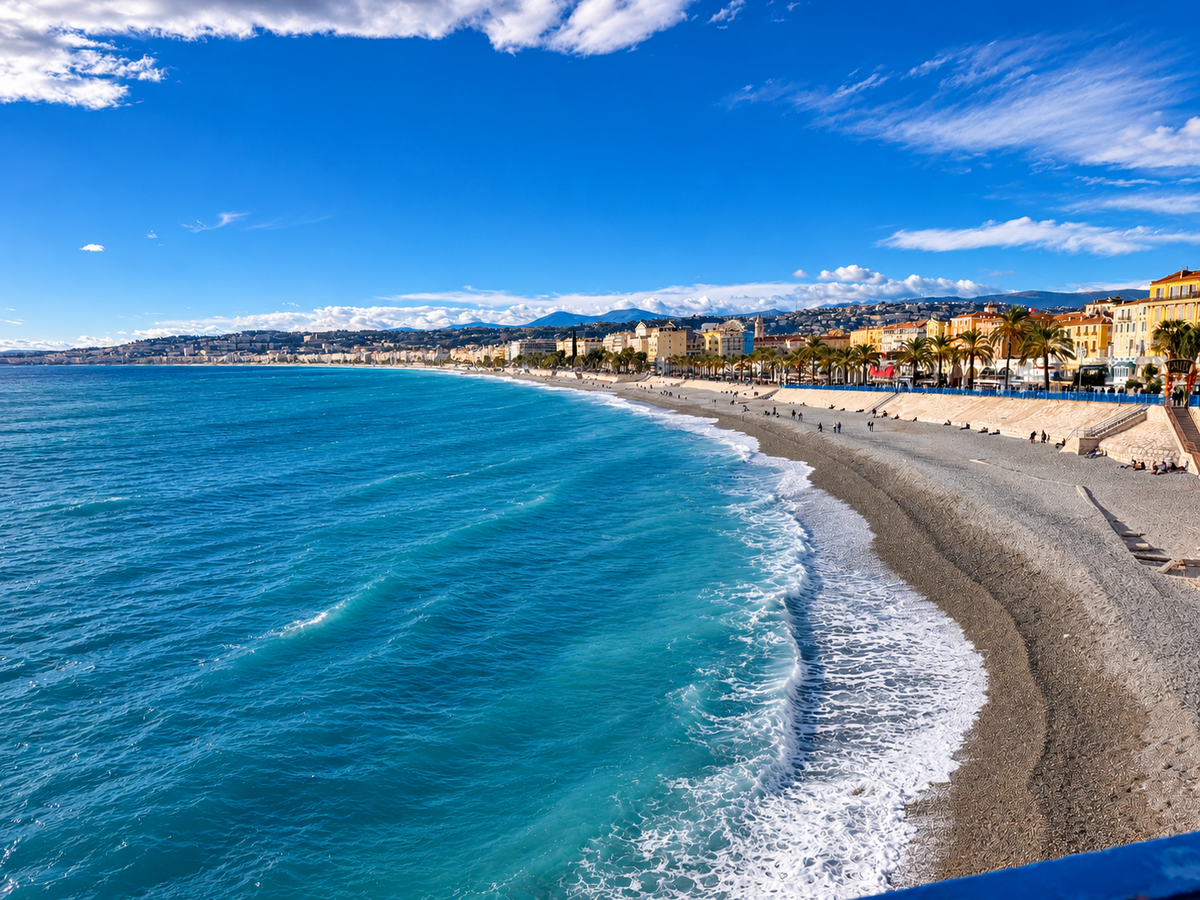
Today, the Promenade des Anglais remains one of the most recognisable urban landscapes in France.
It is at once a place for walking, a sporting destination, a residential seafront and an internationally renowned tourist attraction.
Runners, cyclists, walkers, residents and visitors meet every day along this avenue, which retains its original purpose: offering a place to enjoy the scenery and the Mediterranean.
The Promenade is also part of a heritage setting recognised internationally.
On 27 July 2021, the property « Nice, Winter Resort Town of the Riviera » was inscribed on the UNESCO World Heritage List.
This recognition highlights Nice's urban development, shaped since the eighteenth century by the presence of foreign winter visitors, international cultural influences and the exceptional relationship between the city, the sea and the surrounding mountains.
The Promenade des Anglais is one of the most important elements of this historic and architectural landscape.
9. A Unique Property Heritage on the French Riviera
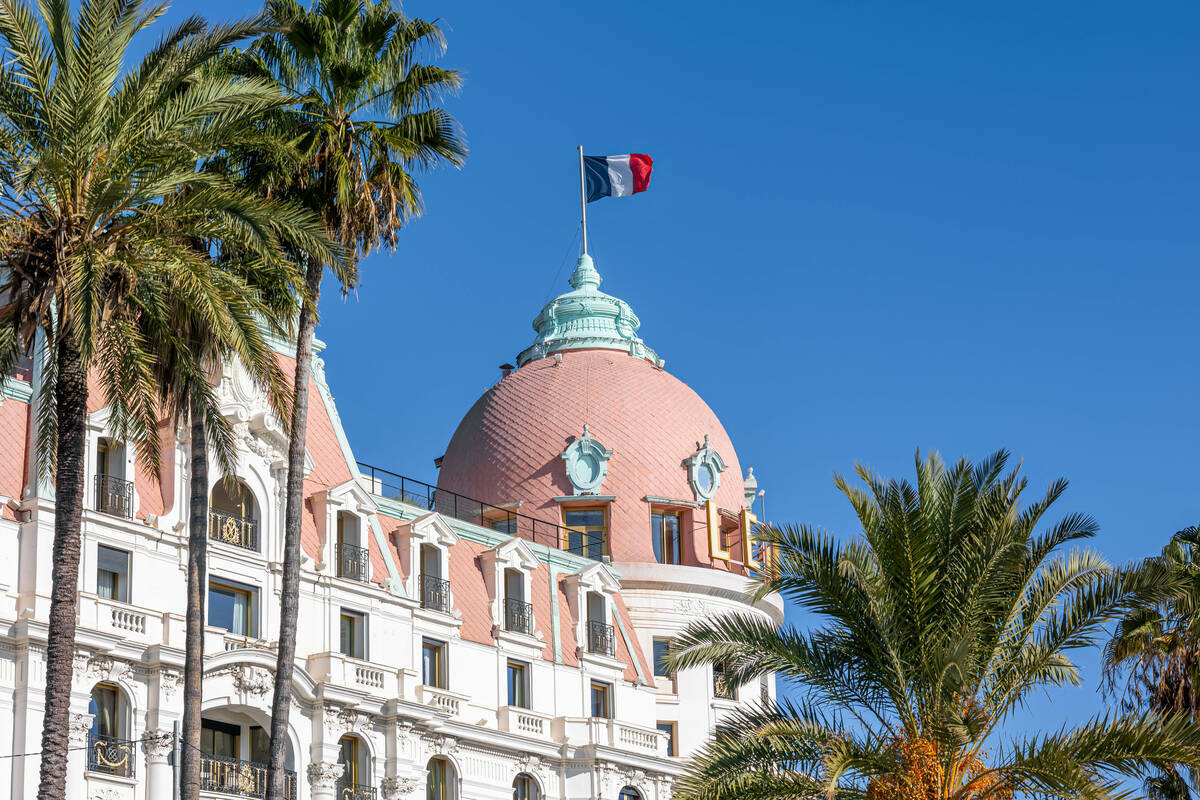
The Promenade des Anglais has a rare distinction: along a single seafront, it brings together architectural styles spanning more than two centuries of history.
From the former holiday villas to the grand hotels of the Belle Époque, from Art Deco façades to large contemporary residences, every building tells the story of a particular era and a different way of experiencing life in Nice.
Some buildings have become genuine heritage landmarks. Others, less well-known, contribute just as much to the architectural identity of the Promenade.
For property buyers, this diversity is particularly appealing. The address, the sea view, the history of the residence, its architecture and its location all contribute to the unique character of each property.
At Winter Immobilier, we are particularly committed to showcasing Nice's property heritage. Since 1958, our agency has been assisting clients with their property projects in Nice, with a special appreciation for the buildings that tell the story of our city.
Discovering the Promenade des Anglais ultimately means understanding part of Nice's soul: a city open to the world, shaped by encounters, the beauty of its coastline and an exceptional architectural history.
The Promenade des Anglais is more than a prestigious address. It is two centuries of Nice's history overlooking the Mediterranean.
Are you considering selling your apartment on the Promenade des Anglais?
I would be delighted to discuss your plans and provide a personalised valuation of your property, taking into account its individual characteristics, floor level, orientation, outdoor spaces, views and, of course, the distinctive value of this iconic residence.

Émilie FOGLIETTI
Winter Immobilier
📞 07 57 07 17 17
💬 WhatsApp : 07 57 07 17 17
🇮🇹 Si parla italiano
🇬🇧 English spoken
LinkedIn : Emilie Foglietti