


Residence
IMPERATOR
Located at 6 Boulevard Gambetta, just steps from the Promenade des Anglais, the Imperator Residence has a fascinating history. Originally conceived in the 1920s as an ambitious hotel and commercial complex, it reflects Nice's architectural and urban transformation during this period. Discover the story behind this remarkable building, its original design, its Art Deco architecture and its transformation over the decades.
The Imperator: The Story of a Former Palace Hotel Turned into an Iconic Nice Residence
6 Boulevard Gambetta · Nice
From the ambitious Residential Palace project to an iconic Art Deco residence in the Gambetta district, the Imperator bears witness to an era when Nice sought to combine elegance, modernity and the Riviera lifestyle.
Located just a short distance from the Promenade des Anglais, at the corner of Boulevard Gambetta and Rue de France, the Imperator holds a special place in Nice's architectural landscape.
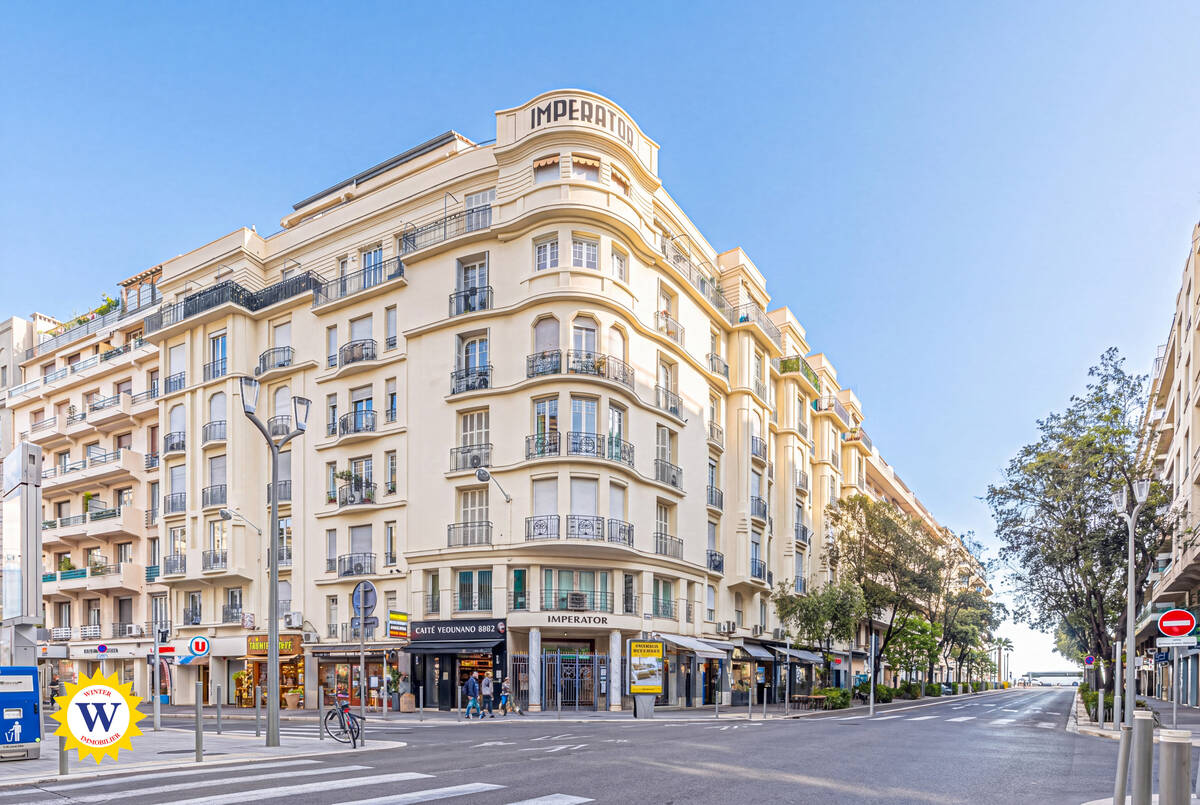
Behind its imposing silhouette and Art Deco-inspired façades lies a history dating back to the 1920s. At that time, Nice was undergoing major urban transformation. The city was attracting an increasingly international clientele and developing new facilities for a society seeking leisure, comfort and modernity.
The Imperator was born out of this ambition: the creation of a large-scale property complex combining hotel accommodation, shops and entertainment facilities, just a few steps from the sea.
1. Before the Imperator: A Historic Nice Estate
Before this property complex appeared, the land belonged to the Landau estate, a vast property occupying part of this area of Nice.
The estate included a villa surrounded by gardens. It had already been partially reduced at the end of the 19th century during the development of Boulevard Gambetta.
At the beginning of the 20th century, the neighbourhood gradually evolved. Its proximity to the Promenade des Anglais, the development of Rue de France and the city's expansion westwards made these plots particularly attractive to property developers.
Around 1926, the former estate was eventually demolished to make way for a major property development led by developer Émile Samett.
This change marked a new chapter in the history of the neighbourhood: a private estate and its gardens were to be replaced by an architectural complex designed to accommodate a new urban and tourist clientele.
2. 1926: The Ambitious Residential Palace Project
The history of the Imperator truly began in 1926, when Émile Samett submitted a building permit application.
The project was entrusted to architect René-Lazare Gastaldi, who designed a particularly ambitious property complex initially named the Residential Palace.
The aim was to create a prestigious development featuring:
- A hotel with approximately 200 rooms.
- Shopping arcades housing numerous boutiques.
- Leisure and entertainment facilities.
- Prestigious amenities, including a swimming pool and casino, advertised in promotional materials of the time.
The original project was considerably larger than the complex eventually built. It was intended to extend towards the Promenade des Anglais, with a low-rise, two-storey commercial building designed to accommodate a shopping arcade.
The plans preserved in the Nice Municipal Archives bear witness to the architectural and commercial ambition of this project.
However, the development was never completed in its entirety. The final configuration of the Imperator was considerably reduced compared with the developer's original plans.
3. 1928: The Birth of the Hôtel Imperator
During 1928, the project gradually took shape and adopted the name Hôtel Imperator.
Nice city directories help trace this evolution: in 1928, the establishment was still listed as under construction. The following year, it appeared under the provisional name Hôtel de France et Gambetta, before eventually being listed under its definitive name, Imperator.
The establishment was part of the modernisation of Nice's hotel industry, at a time when the city was developing an increasingly sophisticated tourist offering.
Interestingly, the actual length of its operation as a hotel remains difficult to establish precisely. The available archives do not confirm an extended period of activity in this form.
A specialist publication, Mediterranea, dated July 1930, nevertheless mentions the involvement of architect Vincent Scoffié, who was responsible for overseeing the hotel's interior fitting-out works.
This information provides further insight into the building's construction and the transformations that accompanied its opening.
Old advertisements also mention leisure facilities, notably a swimming pool and a casino. However, their actual operation and the length of time they remained in use have yet to be documented.
4. Art Deco Architecture Characteristic of the 1920s
One of the Imperator's most distinctive features is its architecture, which perfectly illustrates changing tastes during the interwar period.
René-Lazare Gastaldi's original project displayed regionalist influences, including upper-level pergolas and decorative railings featuring terracotta-tile latticework.
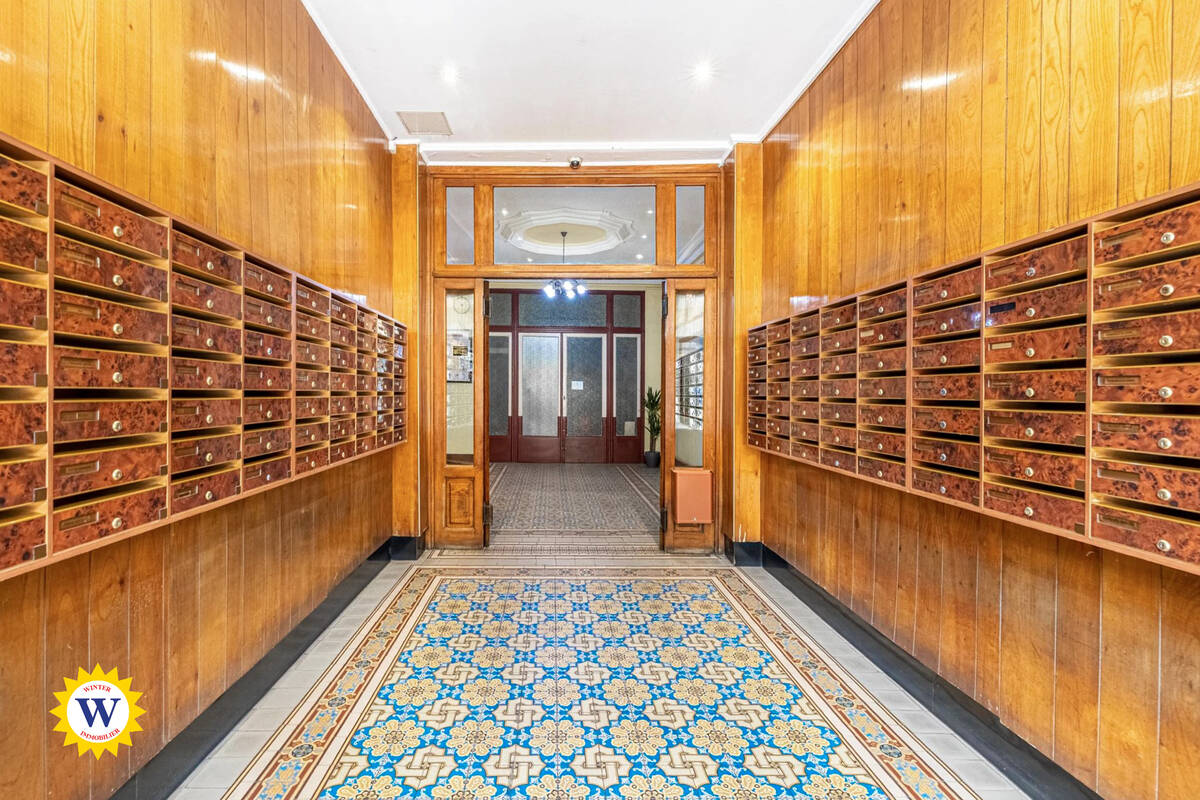
However, the building that was ultimately constructed adopted a very different aesthetic: Art Deco.
This change in architectural direction is particularly interesting. It reflects a desire to give the establishment a more contemporary identity, in keeping with the image of a modern Nice catering to an international clientele.
Several elements define this architectural style:
A monumental composition
The building has a strong presence at the corner of Boulevard Gambetta and Rue de France. Its height and positioning give it a distinctive urban character.
Bold geometric lines
The façades are organised around a regular composition characteristic of interwar architecture. The openings and volumes create a visual rhythm that emphasises the building's verticality.
Bay windows and decorative ironwork
The projecting façade elements, metal railings and ornamental metalwork all contribute to the building's Art Deco identity.
A distinctive corner treatment
The corner between the two streets is an important architectural feature. Its design and upper detailing give the building its own identity and emphasise its strategic position within the neighbourhood.
The overall result retains the elegance characteristic of the major Nice buildings constructed during this period, combining monumentality, functionality and decorative refinement.
It is worth noting that the final architecture does not exactly match the drawings submitted with the 1926 building permit application. This difference is one of the Imperator's distinctive historical features.
5. A Larger Architectural Complex: Imperator, Imperia and the Shopping Galleries
The Imperator should not be viewed as an isolated building.
It forms part of a much larger property development built on the former Landau estate, comprising several buildings sharing a common naming theme:
- L'Impérator, located at the corner of Boulevard Gambetta and Rue de France.
- L'Imper'Azur.
- L'Imperazurea.
- L'Imperia.
These buildings form part of a significant urban block extending between Boulevard Gambetta, Rue de France and the Promenade des Anglais.
The original project envisaged a much more ambitious architectural and commercial continuity.
However, the different parts of this complex were not built at the same time.
Imperia, in particular, represents a later stage in this development. Its extension towards the sea was built from 1948 onwards, under the direction of architect Louis Milon de Peillon, in a different architectural style.
This later construction explains the architectural differences that can be observed between the buildings making up this urban block today.
The history of this complex illustrates several decades of transformation in Nice's urban landscape.
6. From Hotel to Residence: A New Life After the War
After its early years, the Imperator underwent a major change in purpose.
The hotel gradually gave way to a residential building, probably during the 1950s.
This transformation was part of a broader trend in Nice, where many establishments originally designed for tourist or seasonal visitors were adapted for residential use.
The Imperator subsequently became a residential building containing apartments, while retaining its original architecture and identity.
This conversion enabled it to stand the test of time and become a lasting part of the architectural heritage of the Gambetta district.
Its history remains closely connected to the development of the city, near the Promenade des Anglais and Rue de France, two of Nice's major thoroughfares.
7. The Imperator Today: A Prime Address in the Heart of Nice
Today, the Imperator continues to hold a special place in Nice's property landscape.
Its location at the corner of Boulevard Gambetta and Rue de France gives it a privileged position, just moments from the Promenade des Anglais, shops, public transport and the amenities of the city centre.
Its architecture recalls an important period in Nice's history, when ambitious property developments were transforming the city during the interwar years.
Beyond its location, the residence has a genuine heritage significance: it bears witness to a project originally conceived as a large hotel and commercial complex before becoming a residential development.
For lovers of architecture and property history, the Imperator is an interesting example of how Nice has gradually adapted its built heritage to changing uses and lifestyles.
Winter Immobilier: In-Depth Knowledge of Nice's Architectural Heritage
At Winter Immobilier, we are particularly attached to the history of the buildings and major residences that make up Nice's architectural heritage.
Since 1958, our family-run agency has been assisting property owners with their real estate projects, drawing on its experience of the Nice property market to provide tailored valuations and sales services.
Do you own an apartment in the Imperator Residence or are you considering purchasing a property there?
Émilie FOGLIETTI and Winter Immobilier are here to assist you, with in-depth knowledge of the Gambetta district, Rue de France and the Nice property market.
Request a valuation of your apartment in Nice: https://www.agence-winter.com/