


Residence
LES 3 EPIS
Les Trois Épis: One Address, Two Centuries of History on the Promenade des Anglais At 50 Promenade des Anglais, the Les Trois Épis residence tells a story that goes far beyond real estate. Before the modern building designed in the 1950s by architects Georges and Michel Dikansky, this address was already home to a celebrated holiday guesthouse, known successively as the Pension Slave, the Zed Hôtel and later the Pension des Trois Épis. Through old postcards, archival photographs and contemporary architecture, discover how this emblematic site has witnessed the major transformations of Nice: from the era of winter visitors and grand private residences in the 19th century to the modern-day Promenade des Anglais. A journey into the little-known history of 50 Promenade des Anglais, where heritage, architecture and the Niçois art of living come together.
Les Trois Épis in Nice: The History of 50 Promenade des Anglais
From the Pension Slave to the modern residence designed by the Dikansky architects
At 50 Promenade des Anglais, the Les Trois Épis residence has a history that dates back long before the construction of the present building.
Behind its modern 1950s façade lies a former 19th-century holiday guesthouse, successively known as the Pension Slave, Zed Hôtel and later Pension des Trois Épis.
The present building, completed in the late 1950s by architects Georges and Michel Dikansky, is part of one of Nice's major post-war architectural developments: the Capitole complex.
This address therefore tells, on a single site, almost two centuries of Nice's history: from the first holiday villas and the birth of the Promenade des Anglais to the golden age of Belle Époque hotels, followed by the transformation of the city after the Second World War.
An address on one of the world's most famous promenades
Before telling the story of Les Trois Épis, it is important to understand the history of its surroundings.
The Promenade des Anglais emerged in the 19th century with the development of Nice as a winter resort. As early as the 18th century, British visitors were attracted by the mild climate of the Côte d'Azur.
The famous “English Way”, laid out in the early 1820s, gradually became a proper promenade.
In 1844, it officially took the name Promenade des Anglais.
Throughout the 19th century, villas, guesthouses and hotels gradually appeared along the seafront.
The Promenade then became one of the great stages of Nice's social life.
The seafront was transformed: gardens, palm trees, hotels and apartment buildings gradually created the landscape we associate with Nice today.
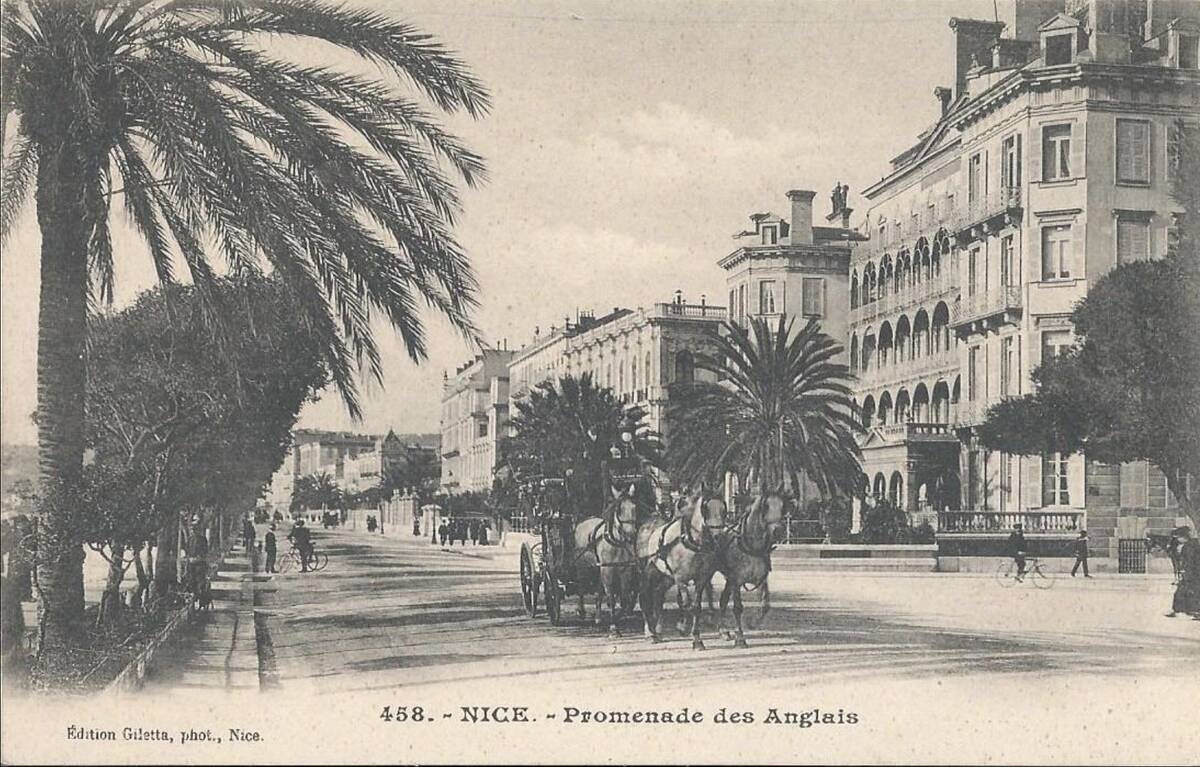
The Promenade des Anglais at the beginning of the 20th century: an era when Nice became one of Europe's great international holiday resorts.
The Mission Nice Patrimoine Mondial also points out that this section of the Promenade contains buildings particularly representative of the 1930s, 1940s and 1950s, including Le Forum and Le Capitole, designed by the Dikansky firm.
Before Les Trois Épis: a villa and then a holiday guesthouse
The history of 50 Promenade des Anglais begins in the second half of the 19th century.
The building that originally stood on the plot was initially associated with the Avigdor estate, and later with the Lions estate.
Historical research allows its existence to be traced back to the 1850s and 1860s.
The building does not yet appear on the neighbourhood's 1854 regulatory plan, but it is shown on the plan of Nice dated 12 September 1860, as well as on a plan of the Lions estate dating from 1861.
At that time, the neighbourhood was still very different from the one we know today.
Large private residences and their gardens occupied extensive plots overlooking the sea.
With the spectacular development of winter tourism, the property gradually took on a hotel-related vocation.
Crédit photo : https://rendezvousnationale7.f...
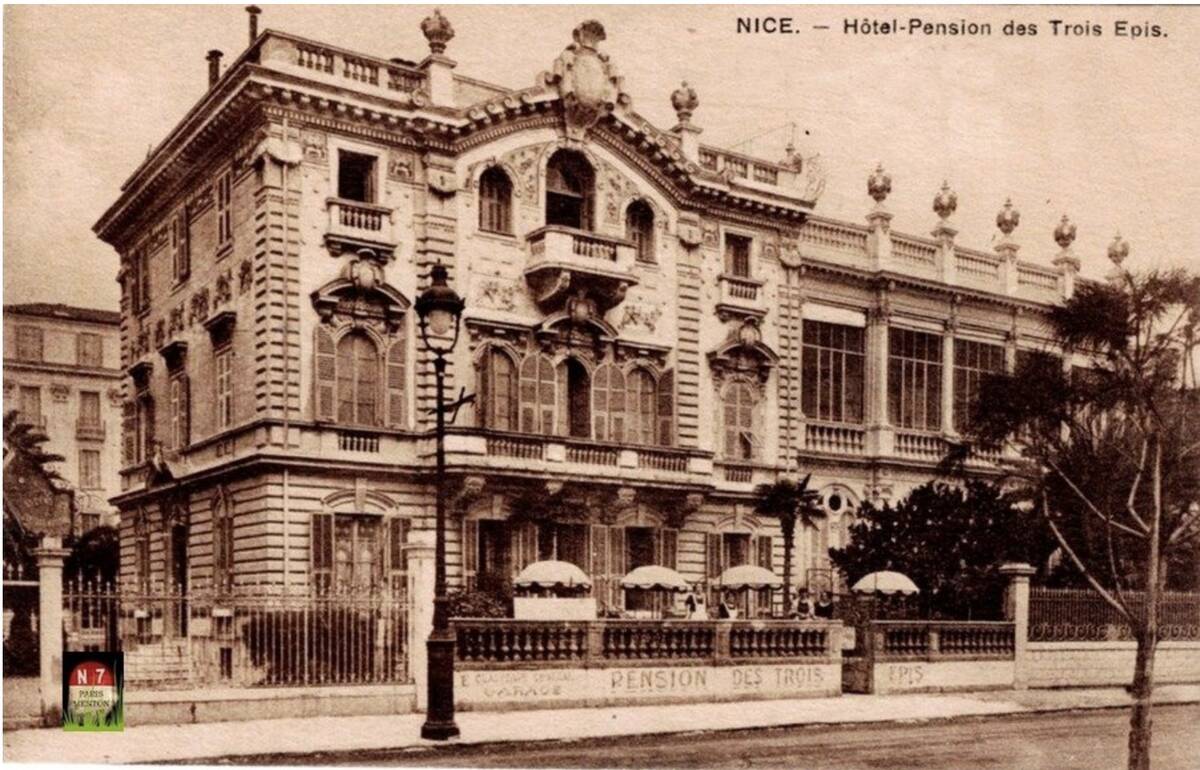
The Pension Slave: a testimony to cosmopolitan Nice
At the end of the 19th century, the former building became a hotel establishment.
It was then known as the Pension Slave.
It was subsequently known as the Zed Hôtel, before becoming the Pension des Trois Épis.
This succession of names reflects the deeply international character of Nice during that period.
The city welcomed visitors from all over Europe: British, Russians, Germans, Austro-Hungarians, Scandinavians and wealthy travellers came to spend the winter on the Côte d'Azur.
The Promenade des Anglais became their favourite place for strolling.
Crédit photo : https://rendezvousnationale7.f...
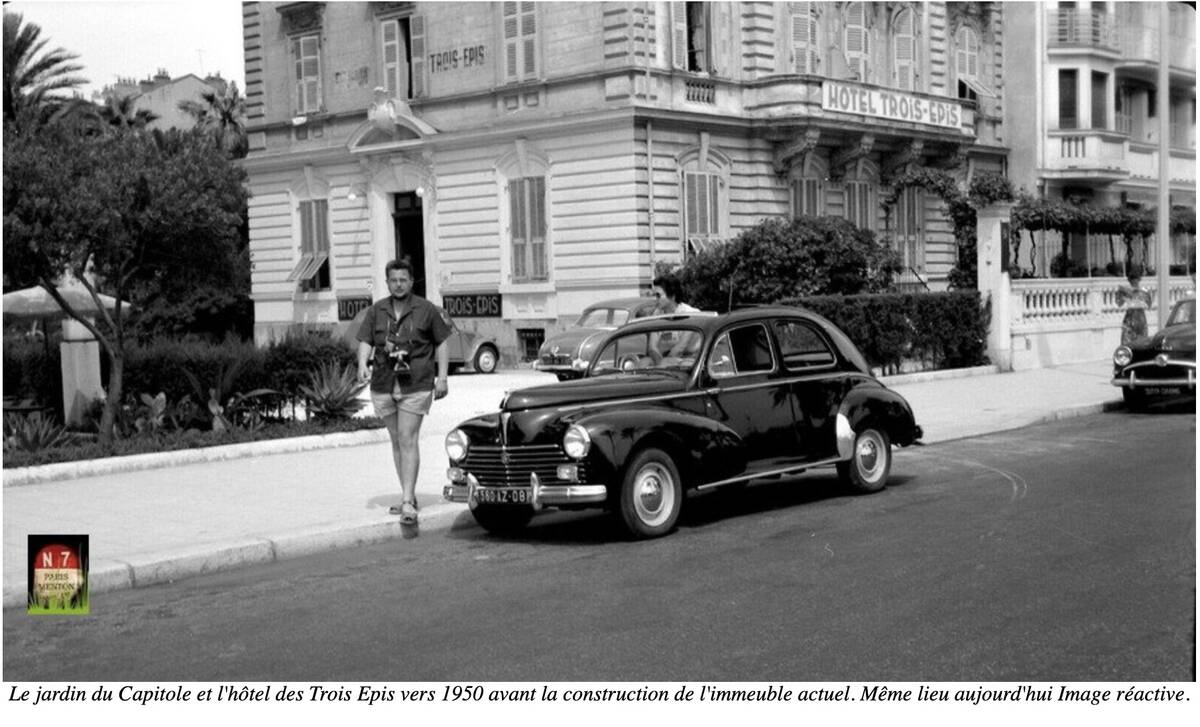
An exceptional photograph from around 1920
One of the most interesting pieces found in the archives of the Mission Nice Patrimoine Mondial is a photograph dating from approximately 1920.
It is captioned:
“La Pension Slave, futur hôtel des Trois Épis vers 1920”
The Hôtel Petrograd can also be seen nearby.
This image makes it possible to visualise the landscape that existed before the current building.
A particularly valuable image for understanding the evolution of 50 Promenade des Anglais.
The Mission Nice Patrimoine Mondial preserves this photograph in its gallery devoted to memories of the Promenade and specifically identifies the Pension Slave as the future Trois Épis establishment.
From the Pension des Trois Épis to the modern building
In the middle of the 20th century, the landscape of the Promenade des Anglais underwent profound changes.
After the Second World War, Nice entered a new period of property development.
Large historic estates were gradually replaced by apartment buildings suited to a new way of living.
It was precisely in this context that the former Pension des Trois Épis disappeared.
The existing building was demolished around 1956 to make way for the present residence.
But the name was preserved.
The new residence therefore became Les Trois Épis, perpetuating the memory of the former hotel establishment.
1956: the project by architects Georges and Michel Dikansky
The project for the new building is particularly interesting.
A building application was submitted in September 1956 by Madeleine Franck-Fourcade.
Building permit No. 596/56 was issued on 26 November 1956.
The architects were Georges Dikansky and his son Michel Dikansky.
The building was completed around 1958.
The general contractor was H. Triverio.
Georges Dikansky, a major name in Nice architecture
The name Dikansky is particularly important in the architectural history of Nice.
Georges Dikansky was among the architects who profoundly shaped the city's landscape during the 20th century.
His work accompanied the transformation of Nice from the decorative architecture of the interwar period to the modernism of the post-war era.
His son Michel Dikansky continued this work and collaborated with him on several major projects.
Among their achievements is the Capitole complex, of which Les Trois Épis forms one of the components.
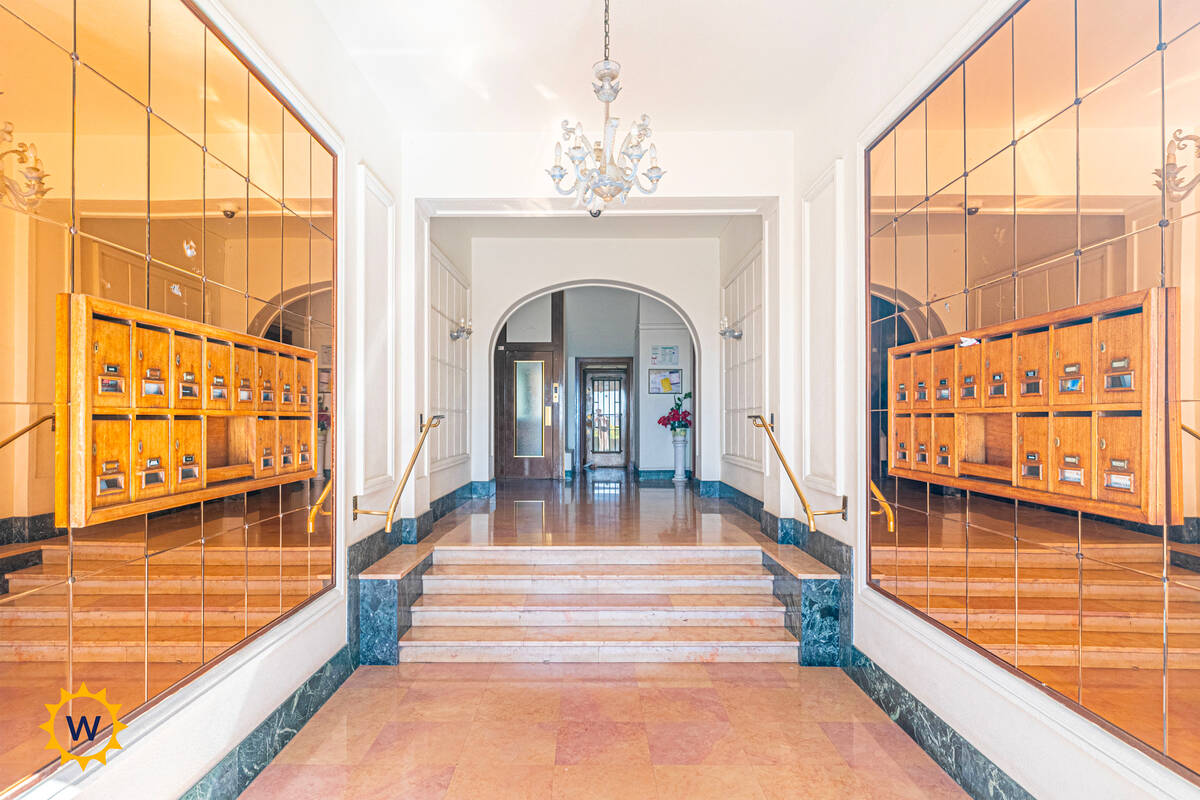
Les Trois Épis and the Capitole complex
To understand the building at 50 Promenade des Anglais, it is therefore necessary to look beyond its façade alone.
Les Trois Épis is historically part of the large architectural Capitole complex, developed progressively after the war.
The development was built between 1948 and 1962.
It represents one of the important examples of modern architecture on the Promenade des Anglais.
The Mission Nice Patrimoine Mondial describes this part of the Promenade as a particularly representative area of buildings from the 1930s, 1940s and 1950s, including Le Forum and Le Capitole by the Dikansky firm.
The French General Inventory of Cultural Heritage also documents the Capitole complex and preserves, among other things, architectural plans produced by Georges and Michel Dikansky.
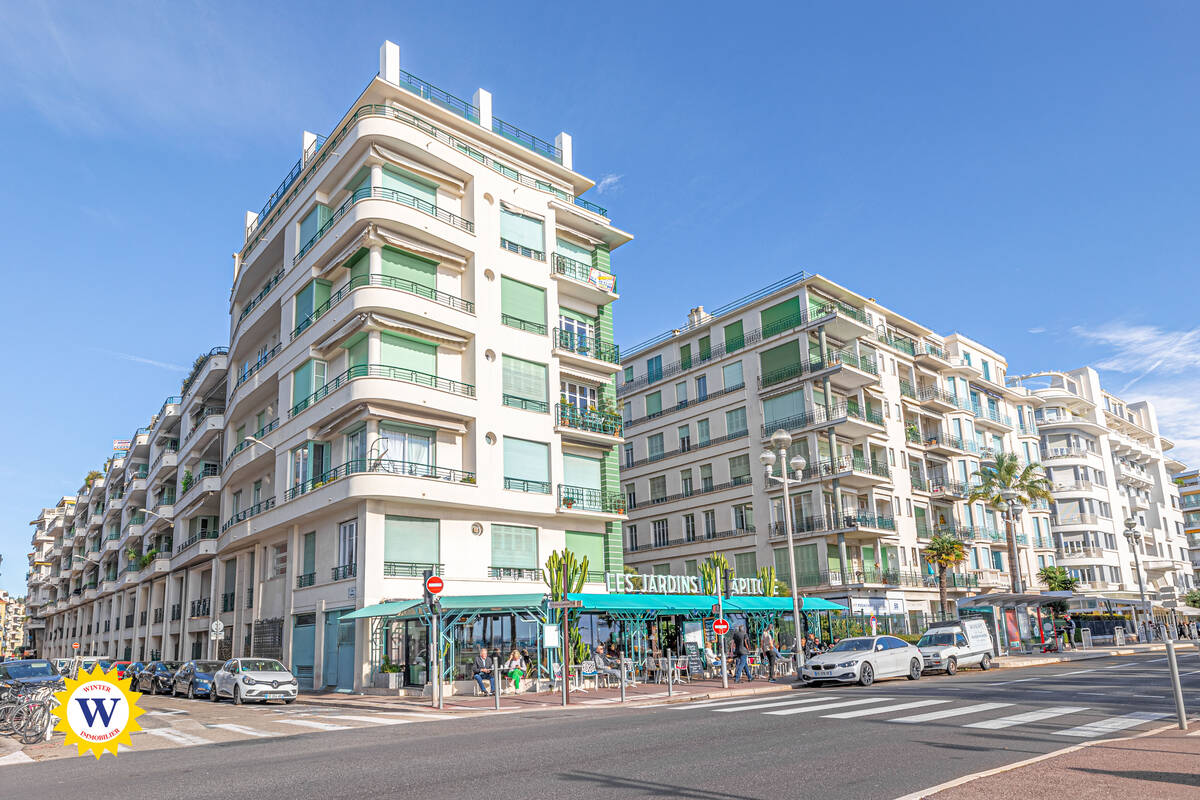
A modern architecture facing the Mediterranean
With Les Trois Épis, we are a long way from the elaborate architecture of the grand hotels of the Belle Époque.
The 1950s favoured a more refined aesthetic.
The lines became simpler.
Balconies and loggias played an important role.
The façades sought greater light and openness.
The building was designed in the spirit of the Modern Movement, characteristic of residential architecture during France's post-war economic boom.
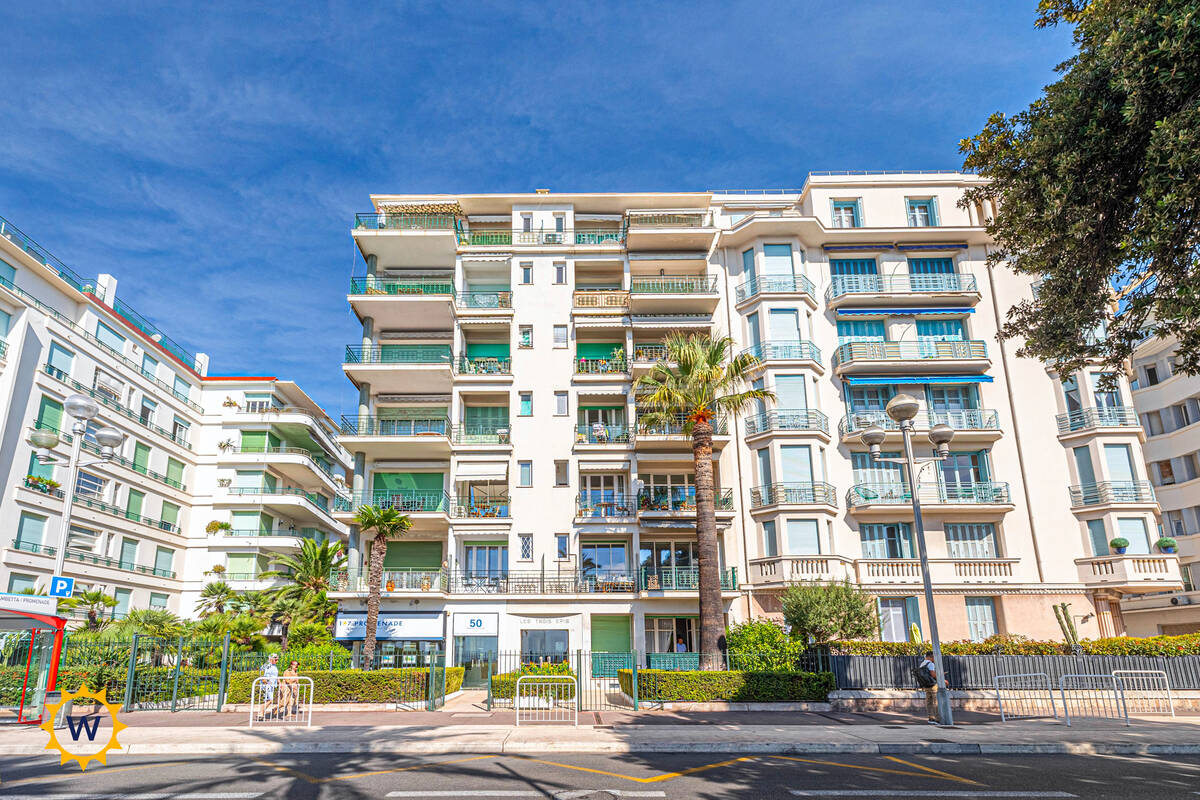
The PSS architectural database places the building at approximately ground floor + 6 upper floors, with a height of around 23 metres.
This architecture responds particularly well to the building's setting: living facing the Mediterranean.
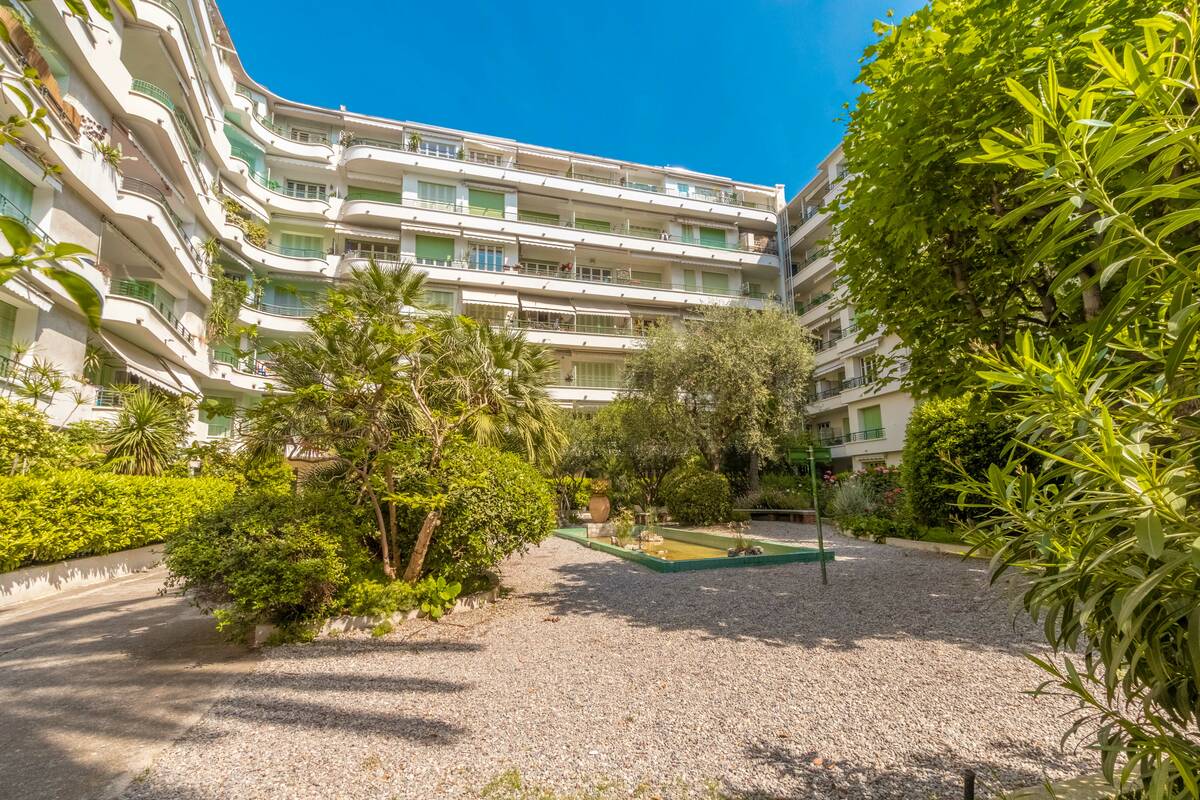
The Capitole garden and the transformation of the Promenade
The history of Les Trois Épis is also connected with that of the Capitole garden.
The Capitole project was designed around an interior landscaped area opening towards the Promenade.
The subsequent construction of Les Trois Épis altered this composition.
The new building occupies part of the edge of the Promenade and gradually obscures part of the garden from the seafront.
This transformation illustrates a major evolution in Nice:
the large plots occupied by 19th-century villas and hotels gradually gave way to modern residential developments.
Then and now: the same site, two eras
This is probably one of the most interesting visuals to include in the article.
Around 1920
On the site of the current residence still stood the Pension Slave, later to become the Trois Épis establishment.
Around 1956
The guesthouse was demolished.
The project for a new modern residential building was launched.
Around 1958
The Les Trois Épis residence appeared in its current architectural form.
Today
50 Promenade des Anglais has become an iconic residential address in this section of the Promenade.
A residence that still bears the name of its past
It is quite unusual for a modern building to retain so directly the name of the establishment that previously occupied its site.
Yet that is precisely the case here.
Les Trois Épis is therefore much more than the name of a residence.
It is a genuine memory of the address.
For several decades, visitors staying in Nice knew this part of the Promenade as the Pension des Trois Épis.
Today, the name still evokes the era when guesthouses and hotels welcomed visitors who came to enjoy the exceptional climate of the Côte d'Azur.
An address at the heart of Nice's history
50 Promenade des Anglais thus stands at the crossroads of several major periods in Nice's history.
The Nice of villas
In the 19th century, the plot was surrounded by large estates and gardens.
The Nice of winter visitors
The building subsequently became a guesthouse and then a hotel, in a city that had become international.
Belle Époque Nice
The Promenade des Anglais became one of the great social centres of the Côte d'Azur.
Post-war Nice
The old buildings were gradually replaced by modern apartment blocks.
Contemporary Nice
Les Trois Épis is today a private residence enjoying an exceptional position on the Promenade.
Les Trois Épis: a witness to the evolution of the Promenade des Anglais
Ultimately, the history of the residence helps us understand the spectacular transformation of Nice's seafront.
Approximately a century separates the 19th-century holiday guesthouse from the modern building designed by the Dikansky architects.
Between the two, Nice became an international metropolis.
Ways of living changed.
The hotel industry evolved.
The automobile transformed the Promenade.
Villas gave way to condominium residences.
But the fundamental purpose of the site remains:
living overlooking the Baie des Anges.
Did you know?
The current building is not the first “Trois Épis” at 50 Promenade des Anglais.
The present building replaced a former guesthouse that already bore this name.
That guesthouse itself had several lives: Pension Slave, Zed Hôtel and then Pension des Trois Épis.
It was finally demolished around 1956 to make way for the current residence.
Les Trois Épis today
Today, the Les Trois Épis residence remains one of the characteristic buildings of the 1950s architectural generation on the Promenade des Anglais.
Its significance lies not only in its location.
It also lies in the history of the site, its architecture and the continuity of its name.
For the owners who live there, knowing this history offers a different way of rediscovering their building.
And for prospective buyers, it adds another dimension to an already exceptional address.
Winter Immobilier – The history of the buildings on the Promenade des Anglais
At Winter Immobilier, we also wish to share the architectural history of the buildings that form part of Nice's residential heritage.
The Promenade des Anglais is not simply a succession of façades overlooking the sea.
Every building has its own history, its architect, its transformations and sometimes even an earlier structure whose memory it preserves.
Les Trois Épis is a remarkable example.
From the Belle Époque Pension Slave to the modern residence imagined by Georges and Michel Dikansky, 50 Promenade des Anglais tells, by itself, a part of Nice's history.
If you are considering selling your apartment at Les Trois Épis, I would be pleased to offer you a confidential and personalised valuation, with no obligation.
Émilie FOGLIETTI
Winter Immobilier
📞 07 57 07 17 17
💬 WhatsApp : 07 57 07 17 17
🇮🇹 Si parla italiano
🇬🇧 English spoken
LinkedIn : Emilie Foglietti